
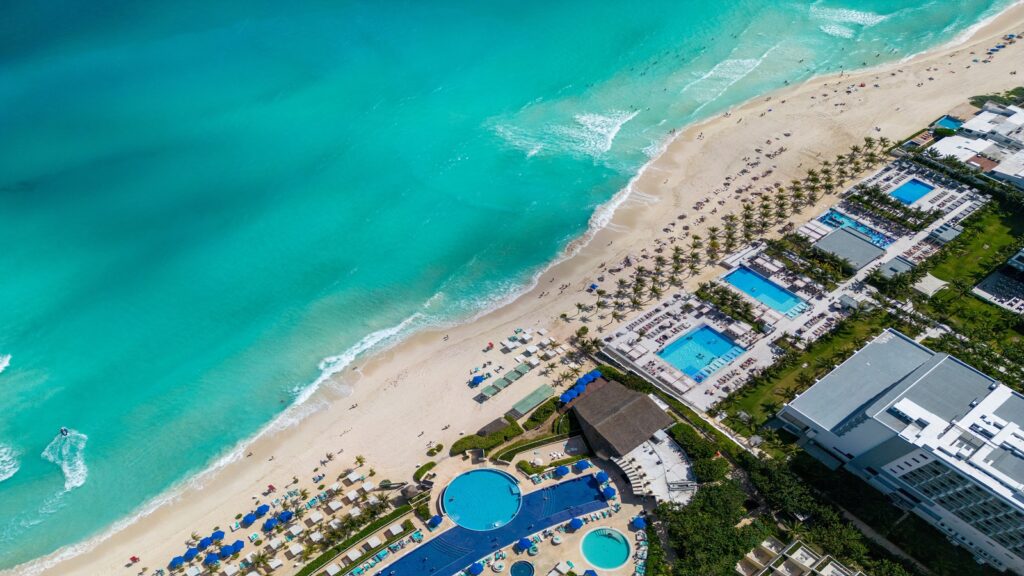
You land at CUN, hop in a cab, and the driver asks: “Centro or Zona Hotelera?” If you don’t know the answer, you’re about to lose twenty minutes and possibly book the wrong hotel for your whole trip. Cancun isn’t one neighborhood, it’s a beach strip and a real Mexican city sitting side by side, and mixing them up is the single most common mistake US travelers make here. Here’s the ground truth on geography, safety, and timing, no fluff.
What Does “Cancun QR” Actually Mean?
If you’ve seen “Cancun QR” or “Cancún, Quintana Roo, Mexico” on a hotel confirmation or customs form, QR is just the state abbreviation for Quintana Roo, which is Mexico’s easternmost state, running down the Caribbean coast and bordering Belize to the south. Cancun is the state’s biggest city and main airport hub, but Quintana Roo also contains Playa del Carmen (45 minutes south), Tulum (90 minutes south), Cozumel (a ferry ride offshore), and Bacalar (the “Lagoon of Seven Colors,” about 4 hours south). If your itinerary bounces between any of these, you’re staying inside QR the whole time, no additional border crossings, no extra paperwork, just a rental car or ADO bus ticket.
Cancun City vs. Zona Hotelera: Don’t Book the Wrong One
This is the split that trips people up. Same city, two completely different vacations.
El Centro (Downtown Cancun)
This is where actual Cancun residents live, eat, and work. Streets are laid out in numbered “Supermanzanas” (SM), so an address like “SM 22” is normal and not a typo. Expect taco stands doing brisk business, Mercado 28 for souvenirs at local prices, and restaurants like La Habichuela or Los de Pescado where a full dinner runs a third of what you’d pay oceanfront. There’s no beach here, the shoreline near downtown is a lagoon, not the Caribbean. Downtown works best if you want a cheaper base, want to feel like you’re in Mexico rather than a resort bubble, and don’t mind a 20-25 minute cab or bus ride to the sand.
Insider tip: The R-1 and R-2 city buses run downtown-to-Hotel Zone routes for about 12 pesos (roughly 70 cents) and are safer and cheaper than flagging a random street taxi.
The New Train Alternative: If you want to explore further down the coast without renting a car, the newly operating Tren Maya (Mayan Train) station sits right behind the Cancun International Airport. A regular shuttle connects the airport terminals to the station for a small fee. It’s a massive state transit project that connects Cancun directly down to major stops like Playa del Carmen, Tulum, and Bacalar, making it a great addition for adventurous travelers looking to skip highway traffic entirely.
Zona Hotelera (The Hotel Zone)
This is the 14-mile strip shaped like the number 7, wrapping around a lagoon with the Caribbean on one side. Addresses here are given by “Km” markers along Boulevard Kukulcán, a resort at Km 9 (like the Fiesta Americana or Live Aqua) is walkable to Coco Bongo and the Forum shops; Km 17-20 (Grand Fiesta Americana Coral Beach, Fairmont Mayakoba is technically outside this zone but similar logic applies) puts you in a quieter, more residential-feeling stretch with wider beaches and less foot traffic. Almost every all-inclusive resort US travelers book: Moon Palace Cancun, Hyatt Ziva Cancun, Live Aqua, sits somewhere along this strip. This is where you want to be if your trip is beach chairs, swim-up bars, and zero interest in leaving the resort.
Insider tip: Lower Km numbers (near downtown, Km 4-9) mean choppier, narrower beach and heavier nightlife noise. Higher Km numbers (15+) mean calmer water, wider sand, and a 25-30 minute cab ride to the clubs if you want them.
Is Cancun Safe? A Straight Answer, Not a Sales Pitch
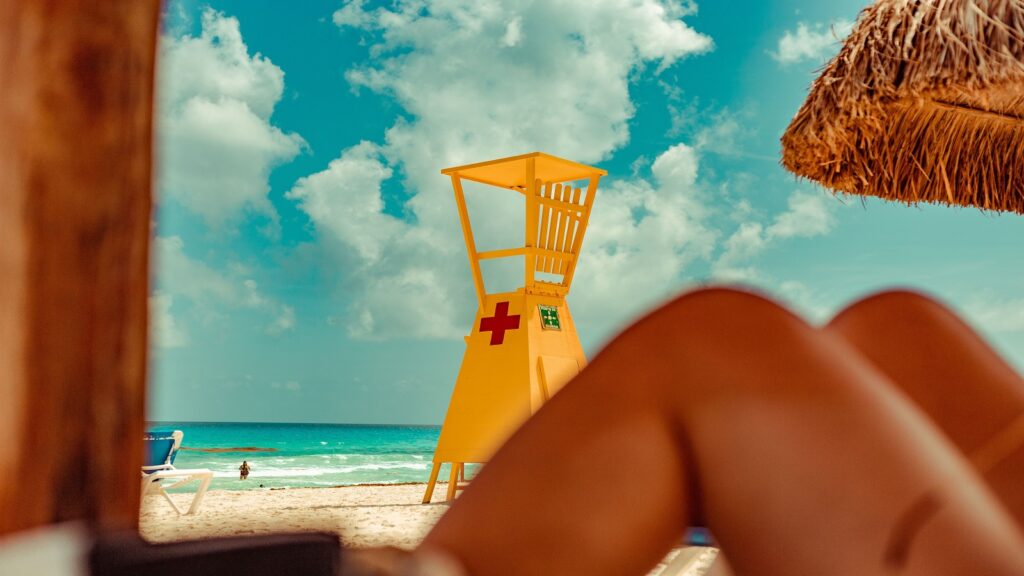
Cancun’s tourist corridor, the Hotel Zone specifically, has a heavy police and military presence because the local economy depends on it, and violent crime targeting tourists there is rare. That said, “safe” doesn’t mean “consequence-free if you’re careless.” Here’s what actually matters:
- Taxis: Uber works in Cancun and is usually cheaper than a street cab, but many Hotel Zone taxi unions block Uber pickups directly outside resorts. Walk to the main road or have the front desk call a hotel-affiliated taxi with a posted rate card, always agree on a price before getting in if there’s no meter.
- Nightlife: Coco Bongo, La Vaquita, and Mandala (all Hotel Zone) are heavily monitored and packed with tourists, genuinely lower-risk than a random downtown bar at 2 a.m. Downtown nightlife around Parque Las Palapas is fine early evening but thins out fast after midnight; don’t wander unfamiliar side streets alone.
- Money: Bring some cash in pesos for tips and street food, but resorts and Hotel Zone restaurants take US cards everywhere. Don’t flash large amounts of cash, and use your hotel safe rather than carrying your passport around, a photo of it and your ID is enough for daily use.
- Tipping (US habits transfer, mostly): 10-15% at restaurants, 20-40 pesos per bag for bellhops, 50-100 pesos/day for housekeeping. Many all-inclusives fold tips into the price, but staff still expect something for direct service.
- Passport rules: You need a valid US passport book to fly into Cancun, a passport card is not sufficient for air travel, even though it works for land/sea crossings elsewhere.
When to Go: Cancun Weather & Seasons at a Glance
- December-April (dry season): Warm, low humidity, minimal rain — peak pricing and peak crowds, especially over spring break (mid-March).
- May-June: Hot and increasingly humid, but rain is still light and prices dip before summer break hits.
- July-August: Hottest, most humid stretch, plus US summer vacation crowds — pack for daily short downpours.
- September-October: Peak hurricane season and the rainiest months — cheapest rates of the year, but watch storm tracks closely before booking non-refundable stays.
- November: A sweet spot — storm risk drops fast, humidity eases, and prices haven’t hit December’s peak yet.
Quick Reference: Downtown vs. Hotel Zone
| El Centro (Downtown) | Zona Hotelera (Hotel Zone) | |
|---|---|---|
| Beach access | None (lagoon only) | Direct Caribbean beach |
| Avg. dinner cost | $8-15/person | $25-50+/person |
| Best for | Budget travelers, longer stays, local culture | First-timers, all-inclusive seekers, honeymoons |
| Distance from CUN airport | ~20 min | 20-35 min depending on Km marker |
| Getting to the beach | 20-25 min bus/cab ride | Walk out your door |
| Nightlife style | Local bars, thins out after midnight | Tourist megaclubs, open till sunrise |
Flying from a US hub like DFW, ATL, or JFK, you’ll land directly at CUN in 2.5-4 hours, pick your Km marker or SM number before you book, and the rest of the logistics fall into place.
Cancun FAQ: Quick Answers to What Everyone’s Actually Googling
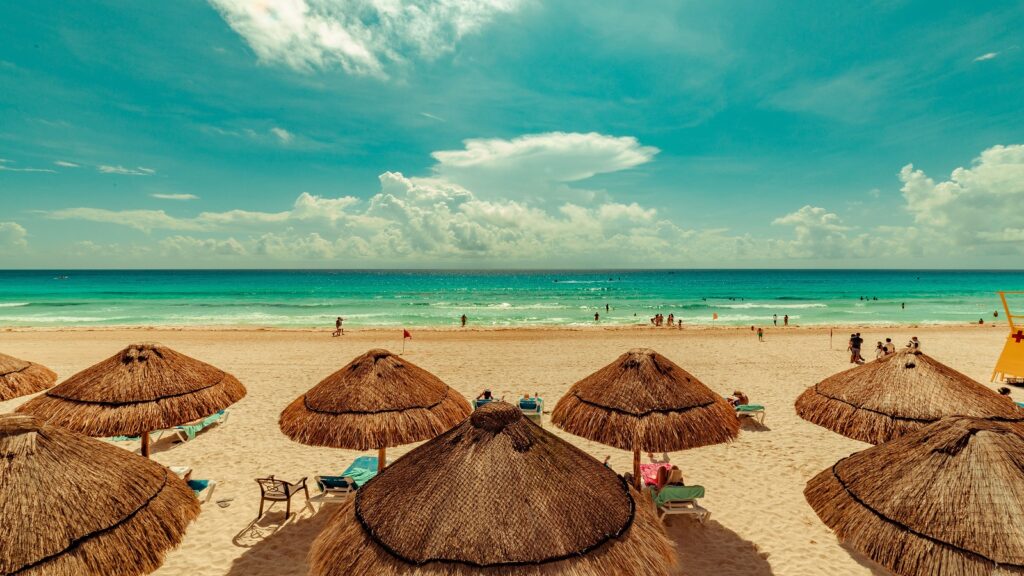
Why is Cancun so famous?
The Mexican government built it from scratch starting in 1970, hand-picking the site for its 14 miles of white sand and turquoise Caribbean water backed by the ancient Maya ruins scattered across the peninsula. That deliberate design, plus direct flights from nearly every major US airport, turned it into one of the world’s most-visited tourist destinations and the busiest airport in Mexico.
Is Cancun okay to travel to right now?
Yes. As of mid-2026, Cancun sits under the same Level 2 “Exercise Increased Caution” advisory it’s held since August 2025, the identical rating the State Department gives France, Italy, and the UK. A February 2026 cartel-related flare-up made headlines, but it centered on Jalisco, over a thousand miles away, and Quintana Roo’s tourism kept operating normally throughout.
Why is Cancun so expensive?
Nearly everything in the Hotel Zone: food, drinks, taxis, hotel construction, gets built or imported to serve international tourists, and pricing follows that captive market. You can sidestep a lot of it: downtown El Centro runs noticeably cheaper for meals and lodging than the beachfront strip a few miles away.
What is the currency in Cancun Mexico?
The Mexican peso (MXN). US dollars are widely accepted at hotels, resorts, and touristy restaurants, but you’ll get a worse effective exchange rate paying in cash dollars than you would using pesos or a no-foreign-transaction-fee credit card.
Why might tourists not go to Cancun?
The honest reasons: hurricane-season risk (June–November), sargassum seaweed piling up on the sand in peak years (usually worst April–August), spring break crowds if you’re not into that scene, and sticker shock in the Hotel Zone if you haven’t budgeted for resort fees and taxes. None of these are safety-driven, they’re logistics and preference issues. It’s worth noting that sargassum isn’t an automatic vacation-killer; Cancun’s major luxury all-inclusives employ massive beach cleaning crews and specialized tractors daily to scrape the sand clean for guests first thing in the morning.
What do tourists do in Cancun?
Beach time in the Hotel Zone, day trips to Isla Mujeres by ferry, snorkeling the reef, and side trips to Chichén Itzá or Tulum’s cliffside ruins top the list. Nightlife (Coco Bongo, La Vaquita), the El Rey ruins inside the Hotel Zone itself, and cenote swimming round out a typical week. Pro-tip for the island ferry: The main, largest terminal with the most frequent departures is Puerto Juárez just north of downtown, but if you are staying in the Hotel Zone, you can completely skip the traffic and catch an Ultramar or Xcaret ferry directly from local hotel zone docks like Playa Tortugas (Km 6.5) or El Embarcadero (Km 4.5).
Can I brush my teeth with tap water in Cancun?
Most people do it without issue, since you’re not swallowing meaningful volume, but water-safety guides covering the region generally recommend bottled water for brushing to be extra safe, especially at budget hotels without their own filtration. If you have a sensitive stomach, keep a bottle by the sink, it’s a small habit that protects real vacation days.
Is there a warning for Americans traveling to Mexico?
Yes, a standing one. The State Department maintains a Level 2 “Exercise increased caution” advisory for Mexico, updated periodically, and it applies state-by-state rather than to the whole country as one block. Quintana Roo (Cancun’s state) currently sits at that same Level 2.
What month not to go to Cancun?
September is the toughest call: it’s typically the wettest month of the year and sits at the peak of hurricane season. If you’re flexible, avoid it unless you’re chasing rock-bottom prices and are comfortable monitoring storm tracks.
What nationality visits Cancun the most?
Americans, by a wide margin. The United States accounted for roughly 63% of Cancun’s international visitors in 2024, with Canada a distant second at under 12%.
How much money do I need for 2 weeks in Mexico?
It depends heavily on style, but budget travelers in Cancun average around $60-65/day, mid-range travelers about $160-165/day, and luxury travelers roughly $440-465/day. For two weeks, that’s roughly $2,200-$2,300 mid-range per person, excluding flights and note that an all-inclusive resort often bundles most of that into one upfront price. (All these are range estimates and are subject to change depending on season, availability, inflation or others)
How much is 1 US dollar in Cancun?
As of early July 2026, 1 USD converts to roughly 17.4–17.6 Mexican pesos at the mid-market rate; exchange counters and hotels will shave a bit off that for their own margin. Rates shift daily, so check a live converter like XE before you travel.
What to be careful of in Cancun?
Unmetered street taxis without an agreed price, unattended drinks in nightlife areas, swimming past flagged safety zones during rip current warnings, and skipping travel insurance during hurricane season. None of these are exotic risks, they’re the same common-sense items you’d watch for in any big tourist city.
Is it safe to walk around Cancun?
In the Hotel Zone during the day and early evening, yes, it’s heavily patrolled and built entirely around tourism. Downtown is generally fine too, but stick to well-lit, populated streets after midnight and skip wandering unfamiliar side streets alone, the same rule you’d follow in any unfamiliar city center.
What does “adults only” mean in Cancun?
It means the resort restricts check-in to guests above a minimum age, usually 18, sometimes 21, and markets itself around a child-free atmosphere, quieter pools, and often a more upscale or party-driven vibe depending on the property. It has nothing to do with explicit content by default; some properties (like Temptation Cancun Resort) lean into a topless-optional, high-energy party concept, while others (like Le Blanc) market pure quiet luxury.
How many days in Cancun is enough?
Five days is the sweet spot most travelers land on, inbound tourists average about 5 days in Cancun, enough for beach time, one ruins day trip, and a night out without feeling rushed. A week gives you room to add Isla Mujeres or Tulum without exhausting yourself.
Do tourists get targeted in Mexico?
Violent crime specifically targeting tourists is rare in the major resort corridors; the more common risk is petty theft, overcharging scams, and unmetered taxi disputes. Cartel-related violence, when it happens, is overwhelmingly between rival criminal groups and concentrated in specific non-tourist regions, not aimed at visitors in Cancun’s Hotel Zone.
Is it safe to go to Cancun right now in 2026?
Yes. Tourism operators, the State Department, and multiple 2026 on-the-ground travel guides all confirm normal operations. Cancun’s advisory level hasn’t changed since August 2025, and recent regional cartel incidents happened in western Mexico, not the Caribbean coast.
What not to bring to Cancun?
Vaping devices, e-cigarettes, pods, and e-liquids are illegal in Mexico and can lead to fines over $10,000 or arrest, leave them home entirely. Also skip camouflage-pattern clothing (restricted to military use under Mexican law), and don’t carry large amounts of undeclared cash.
Is it safe to drink coffee in Cancun?
Yes, as long as it’s made at a hotel, resort, or restaurant, since those businesses use purified or bottled water for anything you consume, including coffee. The tap water itself isn’t safe to drink straight, but that’s separate from coffee brewed commercially, which follows the same purified-water standard as ice and drinking water.
What is the hottest month to go to Cancun?
August. It’s consistently the hottest month of the year for Cancun, with highs regularly near 93°F (34°C) and humidity that makes it feel hotter still.
What not to eat in Mexico to avoid getting sick?
Be cautious with raw or undercooked seafood from unlicensed street vendors, uncooked produce that may have been rinsed in tap water at informal stalls, and anything sitting unrefrigerated in the heat. Established restaurants, resort buffets, and busy, high-turnover street stalls (where food is cooked fresh in front of you) are generally the safest bets.
What to be cautious of in Cancun?
Same core list as anywhere else in the world: distracted walking near traffic (Cancun drivers don’t always yield to pedestrians), overexposure to sun and dehydration in the heat, and time-share sales pitches disguised as “free” tours or discount offers, a genuinely common annoyance here that costs people hours of their vacation.
What is the adult party hotel in Cancun?
Temptation Cancun Resort, on Blvd. Kukulcán at Km 3.5 in the Hotel Zone, is the most consistently cited answer. It’s an all-inclusive, adults-only (21+) resort with topless-optional pool areas and high-energy nightly entertainment; RIU Caribe and Nyx Cancun are the other names that come up most often for a similar party-forward vibe.
What are the must-try foods in Cancun?
Cochinita pibil (achiote-marinated pork slow-cooked in banana leaf), tacos al pastor, fresh ceviche, and a marquesita (a crispy rolled crepe usually filled with Nutella and cheese) cover the essentials. For the real local experience, downtown’s Mercado 28 and Parque Las Palapas serve these at a fraction of Hotel Zone restaurant prices.
Is it better to stay in Tulum or Cancun?
Cancun wins for infrastructure, direct flights, all-inclusive variety, and overall affordability. A mid-range Cancún hotel room typically runs cheaper than Tulum’s boutique beach-zone properties, often by 30-50%. Tulum wins if you want a smaller, more bohemian-luxury vibe with cenotes and ruins closer at hand, but expect higher prices and less resort infrastructure per dollar. Many first-time visitors base in Cancun and day-trip to Tulum rather than choosing one over the other.